


Share This

A Goldilocks Window Opens – But How Wide?
Aug 11, 2026
Weak US jobs data and softer Asian inflation give the Fed some room, but that doesn’t essentially mean a policy pivot. We stay constructively positioned near-term but resist adding to US mega-cap concentration. In our view, Asian tech capex beneficiaries and industrial cyclicals screen better on a risk-adjusted basis. Long-end US yields remain the unresolved structural risk.
But, before I delve deeper, let me make an admission. This is not what I had in mind when I sat down to write the weekly. The US data changed the story. The uncomfortable mix of resilient growth, sticky inflation, and rising US long-term yields at the start of the week seemed to reign supreme. But things changed a day later. As it turns out, weak US employment data has allowed the Fed to remain on pause; inflation has cooled in parts of Asia; fiscal policy is becoming more supportive; and global growth data has been good, not bad. Views should not be taken off the table lightly, but they need not be dismissed just because they were written down earlier. What had looked like an increasingly difficult environment for risk assets may have shifted into something more benign: broader growth, less immediate inflation pressure, and central banks with more time before circumstances forced them to tighten again.
JP Morgan’s Global Composite Output PMI rose for a fourth consecutive month in July to a level consistent with around 2.9% annualised global GDP growth, with strong new orders and job growth indicating momentum is improving outside China. JP Morgan raised its second-half global growth outlook to 2.6% annualised, based on upgrades to US, Euro area, and non-China Asia—certainly this is not how a world economy that is going into recession looks like.
Fed gets the breathing room—courtesy America
The trigger (for the Fed to wait on its next move upward) was a much poorer US employment report in July. Non-farm payrolls fell by an unexpected 23,000, and downward revisions pushed the three-month average gain to just 20,000 jobs a month. Participation in the labour force diminished too, with slower hiring and a slower pace of wage growth pushing labour-income growth to the bottom of the expansion. But the unemployment rate actually fell, to 4.1%. That matters: this was not a recession warning but a subtle reminder that there was less urgency for the Fed to tighten again in the labour market.
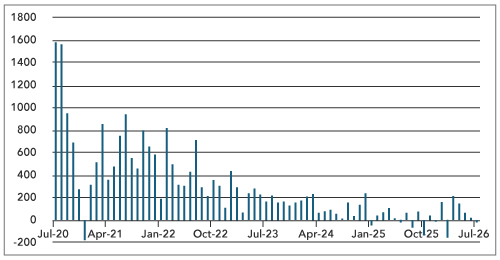
Chart 1: US Headline PCE: 3.7% is Not 2.0%…
Source: Bloomberg
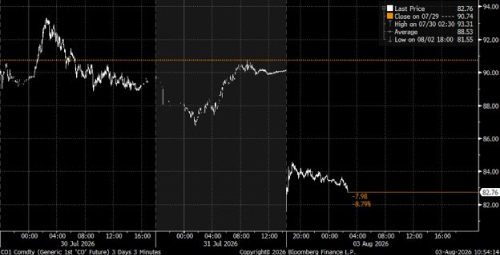
Markets now expect the Fed to hold in September and likely hike the rate in December. That distinction is key, because stocks don’t really fantasise rate cuts. A delay in tightening, in contrast to respectable growth, may be enough to create a friendlier backdrop.
Chart 2: Fed Expected to Raise Rates once Maybe Twice in Coming Twelve Months
Source: Bloomberg
A Fed on hold and the Bank of Japan effectively easing policy via the consumption tax cut are a supportive context for carry trades and a justification for a softer dollar bias in the near future. Gold is already telling that story: prices have pushed to fresh highs around $4,350/oz, up almost 28% in the past year and the same weak payrolls figures that eased pressure on the Fed also reduced pressure on the dollar. That is a cleaner picture of positioning than any single rates call—gold doesn’t move like this on a brief blip in data.
However, beneath the headline rate, a more structural story is unfolding. A recent Forbes survey of more than 8,000 job vacancies found that the proportion of salaried jobs open to people with no previous experience has dropped by roughly 73% since 2022—from 1 in 15 vacancies to about 1 in 50 currently. Applications per vacancy have soared, in contrast to experienced workers who have fared much better.
AI might not yet be killing employment in aggregate, but it is increasingly likely that it is changing how companies hire workers and that is why the Fed exercising caution is a good idea. A labour market may look healthy in the headline but in reality it is far more fragile.
Inflation is getting less problematic by the margin
The second development is moderation in inflation not only being about the US. In Asia, too, July prices surprised on the downside: headline prices in Thailand declined while core prices were flat; Taiwanese core growth was slower; and the Reserve Bank of India held the line with a more dovish policy than expected. Even in Korea and the Philippines, where further tightening may be on the way, softer data has forced central bank decisions to be much more delicate.
In Australia, the inflation undershoot has shifted the debate from whether the RBA needs to raise again to whether the tightening cycle has already ended.
None of this means inflation has disappeared, because energy remains a risk with the Gulf war still alive, and services inflation is sticky in several countries. But markets trade on the margin and the marginal surprise has weakened the case for a synchronised global tightening at a time when growth is expanding.
Fiscal policy is being more supportive
Governments are also doing their bit. Japan is by far the best example: it has confirmed plans to reduce the consumption tax on food to 1% from 8%. The move, economists say, would mechanically cut inflation by around one percentage point and keep domestic demand elevated.
China is different but equally interesting. Domestic demand remains disappointing, but the problem has been under-execution of fiscal measures already authorised rather than insufficient government support. Bond issuance and public investment have lagged in the first half; economists now expect issuance in the second half to be about 4.4% of GDP, compared with 3.5% in the first. At the Politburo meeting in July, a call for faster implementation was explicitly made. China, therefore, still has room to ramp up support without the new stimulus package, and is hopeful it can grow at 4.6% a year as fiscal support complements still-strong exports, but implementation is still the risk.
The capex cycle is still running hot
Another reason to resist the recession narrative is capital expenditure. While the technology investment cycle is cooling down a bit, it is in no danger of falling apart. Global manufacturing is showing a 3% annualised growth rate in the first half and non-tech business spending is starting to improve. America is still a picture of contrast: consensus economist forecasts show US equipment investment growth to be 10.6% in 2026 and intellectual-property investment to be 9.0%.
Asia could be the main beneficiary. Taiwan’s July exports came back to a level, but semiconductor-equipment imports have been running strong and corporate guidance continues to suggest a strong expansion of AI capacity. The boom is spreading well beyond the obvious chip winners: Economists expect Asia ex-China to sustain growth at around 4% annualised on higher consumption and investment—and suggest an alternative view, beyond the US tech titans of the tech sector, to Asian semiconductors, power infrastructure and industrial automation and the bigger domestic benefit of the capex cycle.
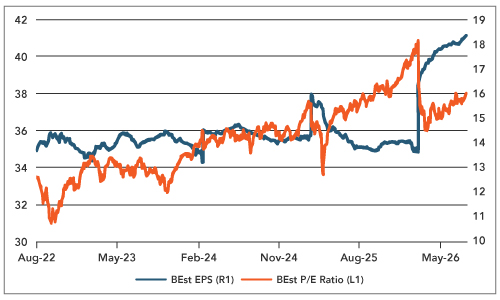
Appetite for European equities is growing, too. There has been a broadening of the advance in the Europe STOXX 600 index as investors have started realising that the earnings of the index are finally off the base of the last three years (Chart 3).
Chart 3: Europe STOXX 600 EPS on the rise
Source: Bloomberg
The Gulf remains the most immediate near-term risk
The situation in Iran and the Strait of Hormuz is far from settled and physical energy flows matter far more than words. But the probability distribution has shifted to accommodation somewhat. Further escalation would require increased costs for what appear to be diminishing marginal gains – Washington seems to have run out of both bullets and options, and has good reason to look for an exit ramp, even if the exit is messy or a temporary one.
A settlement does not have to resolve the core US-Iran issue to be important to markets; it just needs to lower the likelihood of another interruption to Gulf energy flows. The chain is simple: lower geopolitical risk means lower oil risk premium, lower oil prices are a boon to inflation expectations, lower inflation means central banks have more time to do their jobs, and lower policy-rate expectations mean stock prices are higher. Markets like that sequence. The asymmetry cuts the other way as well: a renewed flare-up would reverse each link in that chain quickly – a sharp oil-risk repricing is the more likely near-term shock than a further Fed hike.
The portfolio implication
Our tactical conclusion is more positive. Better global growth, fiscal support, soft marginal inflation, and a slow tightening timetable should also encourage greater market participation for global stocks and not just the top five US mega-cap technology companies. Asia looks particularly attractive as well, with technology capex, industrial investment, and domestic demand on the rise.
More specifically, that implies concentration in the world’s largest US tech names should be reduced in favour of Asian semiconductor and automation stocks, and duration should probably be neutral; the Fed’s pause to wait for the long term does not mean we are going to get too comfortable in the long end.
We would not be complacent. The structural argument for higher US long-term yields has not yet disappeared—in fact, large fiscal deficits, heavy Treasury issuance, stronger nominal growth, and potentially higher term premia remain unresolved. If Goldilocks remains in place, these forces are going to be more important, not less, and the bond market reckoning may simply have been postponed.
The uncomfortable question beyond the cycle
One issue is worth keeping at the back of our minds. The same investment boom boosting productivity, profits, and equity markets might change the distribution of economic opportunity. Labour’s share of US non-farm business income is falling, and workers now get just 53.7 cents of each dollar of value added, about three cents less than before the pandemic. Most economic models predict that increasing AI adoption will reduce that share further. Between 2018-19 and 2023-24, the private sector labour share dropped by 1.7 percentage points, and most of that decline came not from labour shares falling, but from activity shifting to low-labour-share industries. Weak employment is tactically bullish because puts the Fed on pause. If younger generations of workers have ongoing weak employment prospects, they will eventually become profoundly bearish because they would find themselves in a political environment that can cause them to be very angry and pessimistic about the job market.
If younger workers conclude that technological progress raises productivity, profits, and asset prices while reducing their access to employment, housing, and wealth creation, they will eventually vote for a different distribution of the proceeds. Call it socialism, progressive taxation, or simply the political pendulum swinging back towards labour — the likely consequences are higher taxation of capital, greater redistribution, and more intervention in labour markets. That is not next quarter’s investment story, but it may become one of the defining stories of the next decade. For portfolios, it argues for favouring capital- and margin-driven business models over labour-intensive ones as a multi-year tilt, not a next-quarter trade. For now, Goldilocks may be back. The more difficult question is who ultimately gets to eat the porridge.